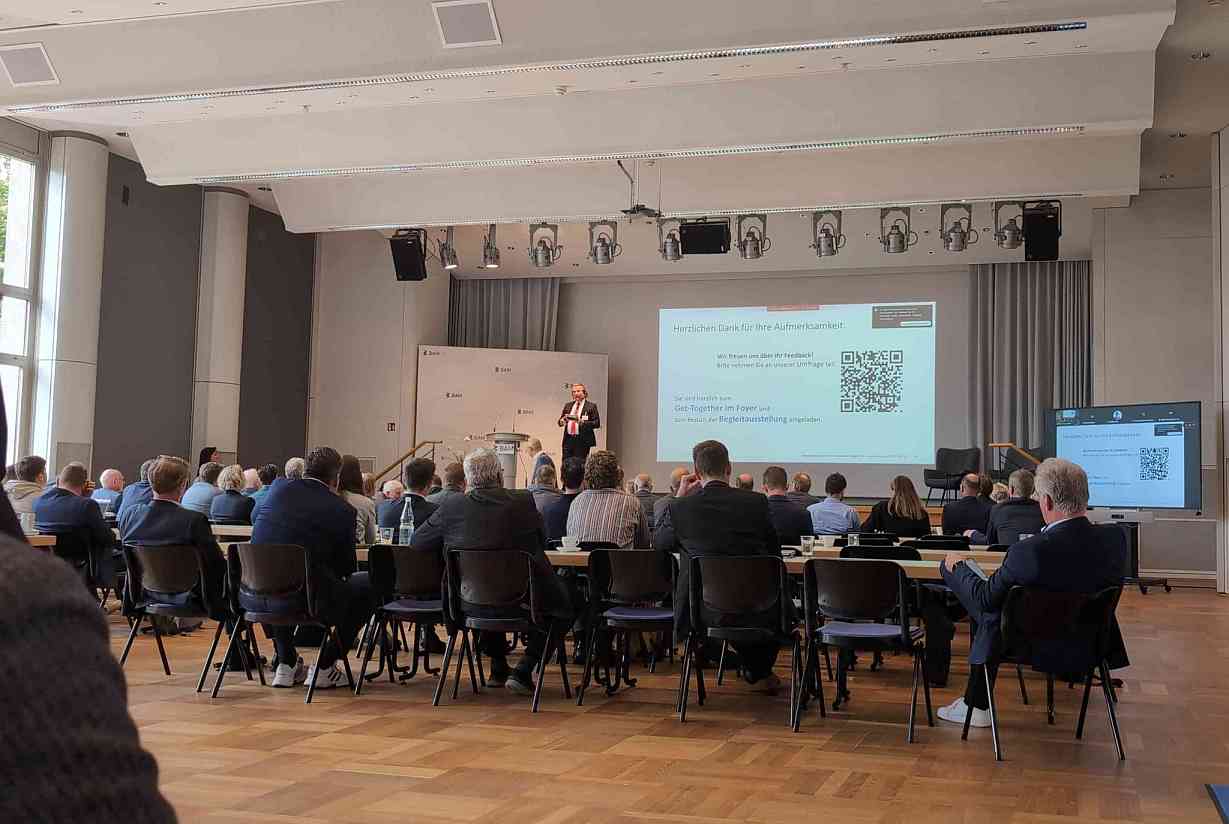
12th lightweight engineering summit took place in Berlin, an initiative of the federal ministry of economy and energy. The event presented a showcase of where lightweight engineering in Germany is at.
Bundesanstalt für Materialforschung und -prüfung hosted this event, and they did a wonderful job.
A representative of the ministry started the event with a speech assessing that the economy in Germany is “under pressure” and that Germany is lacking innovation. One reason, he stated, are the high energy prices in Germany which are a result from the Russia-Ukraine conflict. After abandoning funding for lightweight engineering, funding in general can be expected to decrease further he stated.
My opinion: All the resources for innovation are there which include bright minds and an extensive infrastructure. But innovation is only one factor for success. Price is another main factor. The most innovative product you develop will stay in the shelf if you are not able to offer it for a price customers deem worth it. And this is what Germany cannot provide, as it is not competitive in being cost-effective. These high costs of development and production in Germany have 100% internal (political) reasons, and not to be find external.
Another big issue is that Germany’s economy is politically forced to focus on non-market factors – a recipe for failure. For example, a customer will reconsider a purchase of a car which costs 10,000 € more only because it has a sticker on it saying it is “sustainable”.
A speech I enjoyed very much was from Prof. Dr. Ulrich Prahl from TU Bergakademie Freiberg about Magnesium as a lightweight material. He also talked about why it is not used very much over here: The import from abroad is difficult, indicating politically suppressed, which makes it expensive.
Magnesium has always fascinated me as it is a sensitive and dangerous material (fire hazard) but with impressive, yet challenging properties. And not at least, its golden color satisfies my desire for aesthetics.
In the conversations I had in the breaks, the mood I felt was dampened. For example, a researcher from Fraunhofer-society told me that research is very difficult today, as the financials are tight, and that many researchers are let go.
Final remark:
Was it irony or a symbol of optimism, the building where the conference took place was called the “Ludwig-Erhard-Haus”.
Who was Ludwig Erhard?
He was the minister of economy in post-war Germany and he’s given credit for a booming economy back then.
What was Erhard’s secret to a booming economy?
Was he a brilliant strategist who pulled the right levers to the right time?
A genius in economy mangement?
No.
What he did was: Nothing.
The minister of economy let the economy alone. He did not interfere, let it evolve freely.